Key Points
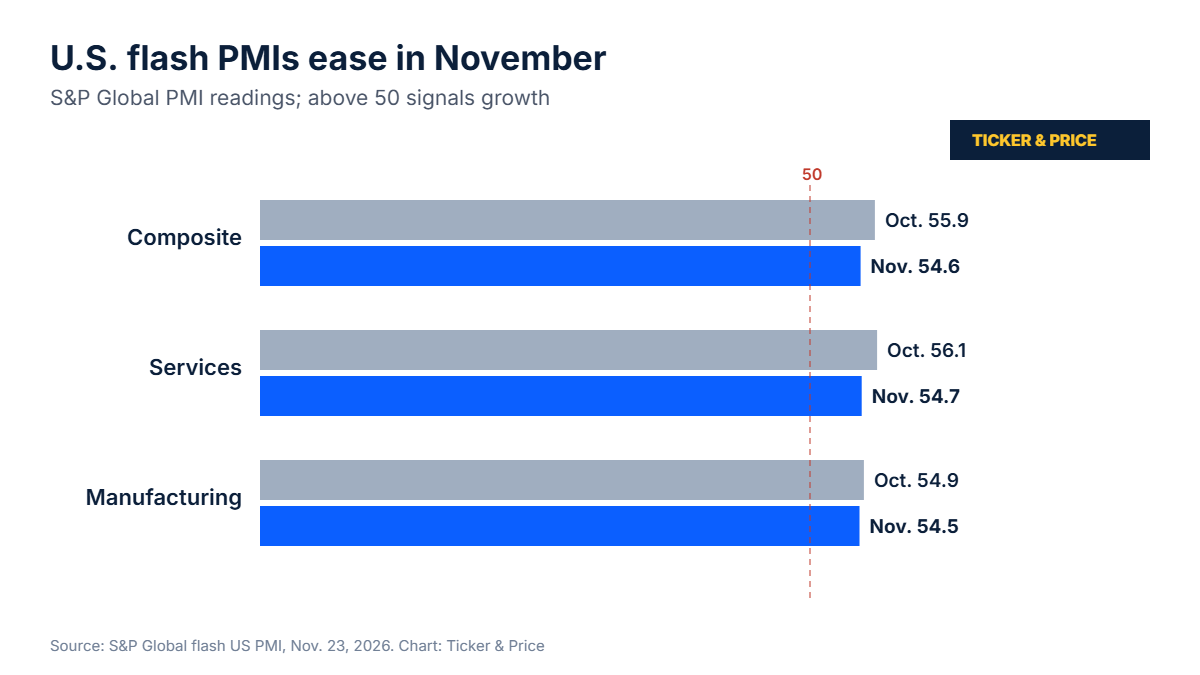
- S&P Global’s flash U.S. composite PMI fell to 54.6 in November from 55.9, the slowest growth since July.
- The services index dropped 1.4 points to 54.7, while the manufacturing PMI slipped to 54.5 from 54.9.
- S&P Global said price gauges still point to inflation well above the Fed’s 2% target.
U.S. business activity grew at a slower pace in November, according to S&P Global’s flash purchasing managers’ surveys released on Monday, though readings stayed well above the 50 level that separates growth from contraction.
The flash composite output index, which combines manufacturing and services, fell 1.3 points to 54.6 from 55.9 in October, its lowest reading since July. The services business activity index fell to 54.7 from 56.1, and the manufacturing PMI eased to 54.5 from 54.9. Manufacturing output dropped to 53.7 from 54.5.
Growth slows but hiring continues
New orders grew for a second month at a slower pace, to the weakest since July. S&P Global said limited capacity held back output and led to a further build-up of unfinished work. Employment rose in both manufacturing and services.
Chris Williamson, chief business economist at S&P Global Market Intelligence, said the surveys point to annualized economic growth of about 3% in the fourth quarter.
Price gauges keep inflation concerns alive
Williamson said inflation eased somewhat in November, but that the surveys’ price gauges remain consistent with inflation well above the Federal Reserve’s 2% target in the coming months. He also said supply delays linked to global shipping had become more widespread.
The data come as traders bet the Fed will raise interest rates again in December. Wednesday’s personal consumption expenditures price index, the Fed’s preferred inflation gauge, is the next major test. Stocks were sharply higher on Monday, led by Nvidia.